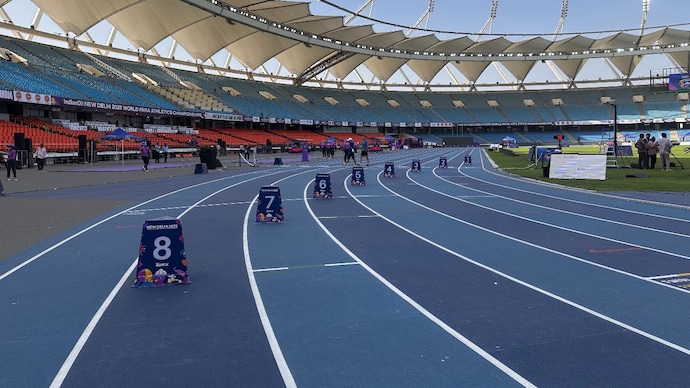
In a major move to transform India’s sports infrastructure, the Jawaharlal Nehru Stadium in New Delhi — one of the country’s most iconic sports venues — is set to be dismantled to make way for a brand-new Sports City spread across 102 acres, according to sources familiar with the development.
The new Sports City project is part of India’s long-term vision to modernise sports facilities and strengthen its case for hosting the 2036 Olympic Games.
A Landmark Transformation for Indian Sports
The Jawaharlal Nehru Stadium (JNS), located in the heart of the capital, has been a central venue for several historic events — from the 1982 Asian Games to the 2010 Commonwealth Games. However, government and sports officials reportedly believe that the current structure no longer meets the standards required for global competitions.
Sources said the decision was made after multiple studies showed that retrofitting the existing stadium would cost nearly as much as building an entirely new complex.
As a result, the Ministry of Youth Affairs and Sports, in collaboration with the Sports Authority of India (SAI), is planning a complete redevelopment of the area into a state-of-the-art Sports City.
wheeloffortuneonline.co | icosmin.com | famevaults.com
houserenovant.com | homesfact.com
What Will the New Sports City Include?
According to early plans, the new 102-acre Sports City will be a multi-sport complex, designed to meet Olympic standards and accommodate training, competitions, and public engagement.
The Sports City is expected to include:
-
A new 80,000-seater national stadium with modular design.
-
Indoor arenas for basketball, badminton, wrestling, and gymnastics.
-
Aquatic complex with Olympic-size pools and diving facilities.
-
Athlete village with residential quarters and recovery centres.
-
High-performance training centre powered by sports science and analytics.
-
Public sports facilities like jogging tracks, open gyms, and community grounds.
-
Retail and entertainment zones to promote tourism and engagement.
The project will likely be developed as a Public-Private Partnership (PPP), with the government providing land and approvals while private investors bring in technology, design, and funds.
Focus on Sustainability and Smart Design
Officials have indicated that sustainability will be a key focus of the redevelopment. The new Sports City will incorporate eco-friendly designs, including:
-
Solar energy systems for power.
-
Rainwater harvesting and wastewater recycling.
-
Smart lighting and digital management systems.
-
Green landscaping to preserve open spaces.
In addition, planners aim to make the complex accessible and inclusive, with barrier-free movement for differently-abled athletes and spectators.
Preparing for the 2036 Olympics Bid
India has been actively exploring a bid to host the 2036 Olympics, and upgrading sports infrastructure is seen as a crucial step in that direction.
According to government insiders, Delhi’s Sports City will serve as a model project, setting the benchmark for other Indian cities like Ahmedabad, Mumbai, and Bengaluru, which may also see similar upgrades.
Hosting the Olympics has been a long-standing ambition for India. Prime Minister Narendra Modi, during his address at the opening of the International Olympic Committee (IOC) session in 2023, expressed India’s interest in bringing the Olympic Games to the country.
The Jawaharlal Nehru Sports City could therefore become a central hub for training and international events in the run-up to the 2036 bid.
A Stadium with a Storied Past
Built originally for the 1982 Asian Games, the Jawaharlal Nehru Stadium has hosted numerous historic events, including:
-
The 2010 Commonwealth Games opening and closing ceremonies
-
The SAFF Football Championships
-
Concerts and large-scale cultural festivals
The stadium’s massive size — with a seating capacity of nearly 60,000 — made it one of Asia’s largest sports arenas. However, over the years, it has faced challenges with maintenance, underutilisation, and obsolete infrastructure.
While the decision to dismantle it marks the end of an era, sports experts say it’s a necessary step forward to meet global standards.
Voices from the Sports Community
The news has received mixed reactions from athletes, coaches, and Delhi residents.
Former Indian athlete and coach Anju Bobby George said,
“It’s emotional to think about the stadium going, but India needs modern facilities to compete globally. If this project helps young athletes get world-class training, it’s worth it.”
Meanwhile, a few local sports groups have expressed concerns about temporary displacement of training facilities, urging the government to create alternate venues during the construction period.
Sources suggest that temporary sports setups will be arranged in nearby complexes like the Indira Gandhi Indoor Stadium and Talkatora Stadium until the new facility is ready.
Estimated Cost and Timeline
While official numbers haven’t been released, early reports indicate that the Jawaharlal Nehru Sports City Project could cost between ₹5,000 crore and ₹7,000 crore.
The construction is expected to take four to five years, with phase one — including the main stadium — likely to be completed by 2030.
Once operational, the complex is expected to generate employment, boost tourism, and revitalize Delhi’s sports ecosystem.
Public Reaction and Future Outlook
On social media, the news has sparked nostalgia among Delhi residents who have fond memories of concerts, football matches, and school sports days at the old stadium.
However, many also agree that the revamp is overdue. With India’s sporting achievements on the rise — from the Olympics to cricket and badminton — a world-class multi-sport facility in the capital is seen as a symbol of progress.
Urban planners believe the project could redefine Delhi’s sports landscape, making it a global sporting destination while offering recreational spaces for the city’s youth.
Conclusion
The choice of a modern 102-acre sports city to replace the Jawaharlal Nehru Stadium is an ancient shift in the planning of Indian sports facilities This reflects India’s evolving ambitions to compete and host on a global scale, especially as we look towards the 2036 Olympics.
While Pass is passionate about many things, it also marks an ambitious leap — perfectly blending background, time, and vision for a destiny-ready infrastructure of sports activities that could inspire generations to return .
famevaults.com famevaults.com famevaults.com famevaults.com famevaults.com famevaults.com famevaults.com famevaults.com famevaults.com famevaults.com famevaults.com famevaults.com famevaults.com famevaults.com famevaults.com famevaults.com famevaults.com famevaults.com famevaults.com famevaults.com famevaults.com famevaults.com famevaults.com famevaults.com famevaults.com famevaults.com famevaults.com famevaults.com famevaults.com famevaults.com famevaults.com famevaults.com famevaults.com famevaults.com famevaults.com famevaults.com famevaults.com famevaults.com famevaults.com famevaults.com famevaults.com famevaults.com famevaults.com famevaults.com famevaults.com famevaults.com famevaults.com famevaults.com famevaults.com famevaults.com famevaults.com famevaults.com famevaults.com famevaults.com famevaults.com famevaults.com famevaults.com famevaults.com famevaults.com famevaults.com famevaults.com famevaults.com famevaults.com famevaults.com famevaults.com famevaults.com famevaults.com famevaults.com famevaults.com famevaults.com famevaults.com famevaults.com famevaults.com famevaults.com famevaults.com famevaults.com famevaults.com famevaults.com famevaults.com famevaults.com famevaults.com famevaults.com famevaults.com famevaults.com famevaults.com famevaults.com famevaults.com famevaults.com famevaults.com famevaults.com famevaults.com famevaults.com famevaults.com famevaults.com famevaults.com famevaults.com famevaults.com famevaults.com famevaults.com famevaults.com famevaults.com famevaults.com famevaults.com famevaults.com famevaults.com famevaults.com famevaults.com famevaults.com famevaults.com famevaults.com famevaults.com famevaults.com famevaults.com famevaults.com famevaults.com famevaults.com famevaults.com famevaults.com famevaults.com famevaults.com famevaults.com famevaults.com famevaults.com famevaults.com famevaults.com famevaults.com famevaults.com famevaults.com famevaults.com famevaults.com famevaults.com famevaults.com famevaults.com famevaults.com famevaults.com famevaults.com famevaults.com famevaults.com famevaults.com famevaults.com famevaults.com famevaults.com famevaults.com famevaults.com famevaults.com famevaults.com famevaults.com famevaults.com famevaults.com famevaults.com famevaults.com famevaults.com famevaults.com famevaults.com famevaults.com famevaults.com famevaults.com famevaults.com famevaults.com famevaults.com famevaults.com famevaults.com famevaults.com famevaults.com famevaults.com famevaults.com famevaults.com